


Policy in Action: Medicaid Matters for Nursing Home Quality
The Moving Forward Coalition was launched in 2022 to bring together diverse leaders, stakeholders, and experts to address long‑standing challenges in nursing home quality. Guided by The National Imperative to Improve Nursing Home Quality, the landmark 2022 National Academies of Sciences, Engineering, and Medicine report, the Coalition came together to prioritize recommendations, build consensus, and develop action plans grounded in lived experience and evidence.
From the beginning, the Coalition was designed to do more than produce recommendations. We exist to turn consensus into action and to make sure the NASEM report recommendations do not just sit on a shelf. We are testing practical solutions, learning from implementation, and translating those lessons into policy‑relevant insights that can strengthen nursing home quality nationwide.
Now in our fourth year, the Coalition serves as a national hub for implementation, learning, and leadership. We are leading collaborative quality improvement initiatives, convening residents, clinicians, owner/operators, advocates, researchers, and policymakers around shared priorities, and building the infrastructure, resources, and community needed to sustain progress over time. Across all our work, we focus on strengthening the conditions that make nursing homes places where people want to live, work, and receive care.
Why Medicaid Matters
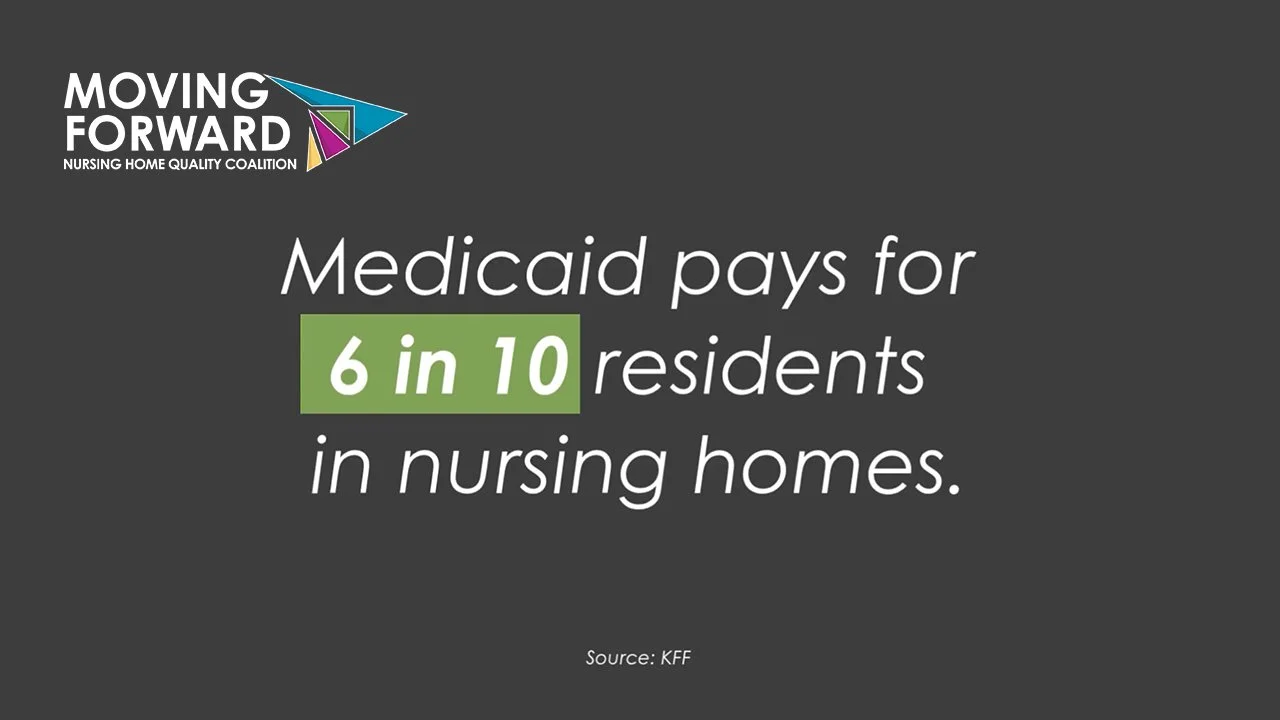
Medicaid finances a substantial share of nursing home care and influences staffing stability, access to services, and residents’ quality of life. Because most older adults and people with disabilities who live in nursing homes rely on Medicaid to pay for their care, these policy choices shape daily life for residents and families, affect wages and staffing for workers, and determine the resources administrators have to meet quality expectations.
“[Medicaid] is not just a line in a budget. It’s the only thing keeping me, and many others, safe, cared for, and connected to the world.”
Residents, workers, care partners, and advocates share a consistent message: financing policy and quality outcomes go hand in hand. When policymakers overlook lived experience and operational realities, residents may face higher risks of harm—including neglect and abuse—individuals may lose stability and choice, and workers may lack the support they need to provide quality care. Policymakers can strengthen nursing home quality and accountability when they include these perspectives in the conversation.

What We’re Doing
The Steering Committee sets priorities for our efforts to raise awareness about why Medicaid matters for nursing home quality and brings lived experience into the Coalition’s policy strategy, including insight into how the Reconciliation Act affects residents, workers, and care partners/family members. Together, we turn that guidance into clear, practical actions by:
Partnering with residents, workers, care partners, advocates, and other organizations to elevate residents’ voices and keep the focus on day‑to‑day realities.
Creating plain language tools so policymakers, the people who live, work, and depend on nursing homes, and partners understand the implications for quality care.
Engaging policymakers, including through a letter to the Senate Finance Committee, so decision-makers hear directly about impacts on residents, communities, and the workforce.
Sharing stories and learning through Coalition Conversations and member networks to build understanding and sustain attention on why Medicaid matters.
Together, these actions help us demonstrate how Medicaid policy decisions shape quality care and daily life in nursing homes.
We also draw on lessons from our implementation work—on staffing stability, care planning, leadership, and quality improvement—to show how Medicaid financing decisions affect daily operations and resident experience.

Get Involved
This effort reflects the Coalition’s broader policy approach: we center the voice of residents, ground recommendations in real‑world practice, and build consensus through Steering Committee leadership. We invite residents, workers, family members, providers, and advocates to share experiences and insights that can demonstrate why Medicaid Matters for nursing home quality.
Example: We believe those most affected by policies and programs should inform them. In partnership with our Steering Committee, we developed a testimonial video elevating resident perspectives.


Medicaid Matters Repository
The Medicaid Matters for Nursing Home Quality Repository collects the Coalition’s materials that show how Medicaid policy decisions affect nursing home quality and daily life.
Videos featuring the people who live, work, and depend upon nursing homes
Fact sheets and other plain‑language resources
Letters and outreach to policymakers
Written analysis and related Coalition statements
Coalition Conversations and other convenings
Use these resources to learn more, share lived‑experience insights with partners, and support policy discussions about Medicaid’s role in nursing home quality.
Medicaid Matters for Residents
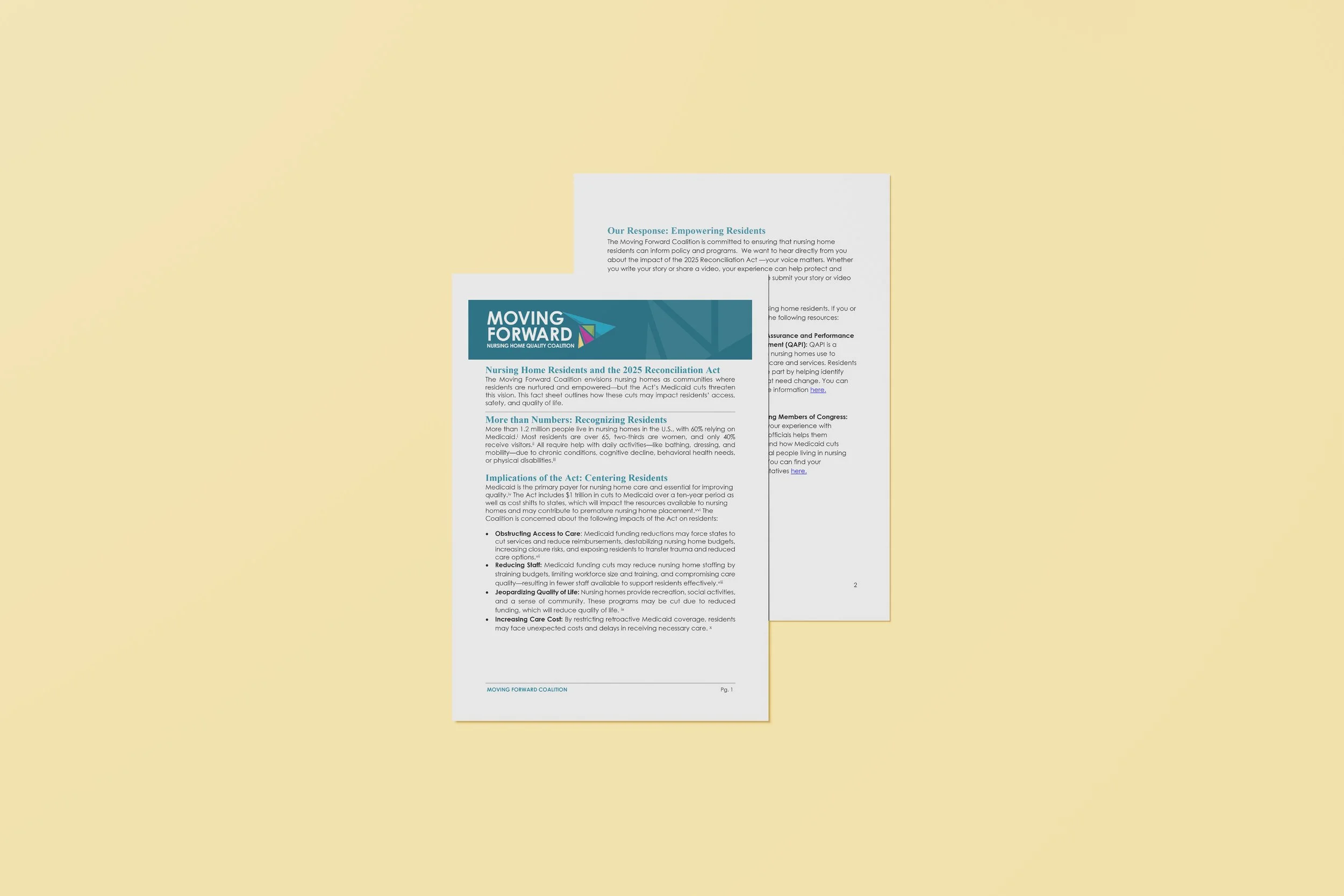
States might cut services and decrease reimbursements, resulting in reduced access to care, layoffs, compromised quality of life, and higher costs of care.
Medicaid Matters for Workers
Cuts to Medicaid and SNAP, along with immigration restrictions, may undermine job security, reduce health coverage and financial stability, weaken immigration protections, and compromise quality of care.
Medicaid Matters for Providers
Nursing home providers rely heavily on Medicaid and may face higher closure risk, reduced staff quality, poorer resident and staff quality of life, and delays in coverage.
Medicaid Matters for Caregivers
More than 63 million family caregivers support people with daily tasks, and many provide nursing home-levels of care. Cuts to Medicaid may force premature placement for some families, while also reducing the availability and quality of care.